
Contractor Performance & Site Management Policy
Aging In The Comfort Of Home® Construction and Remodeling Division
Purpose: To maintain consistent quality, cost control, and professionalism across all projects. These guidelines ensure that contractors operate efficiently, minimize unnecessary trips, and complete work correctly the first time.

1. Site Visit Policy
Site Visit Reporting:
After completing a site visit, contractors provide the administrative office with the following information for quoting and approval:
- Detailed Scope of Work: An itemized breakdown of all tasks to be performed.
- Materials List: A complete list of necessary materials. If materials are customer-provided, this must be noted.
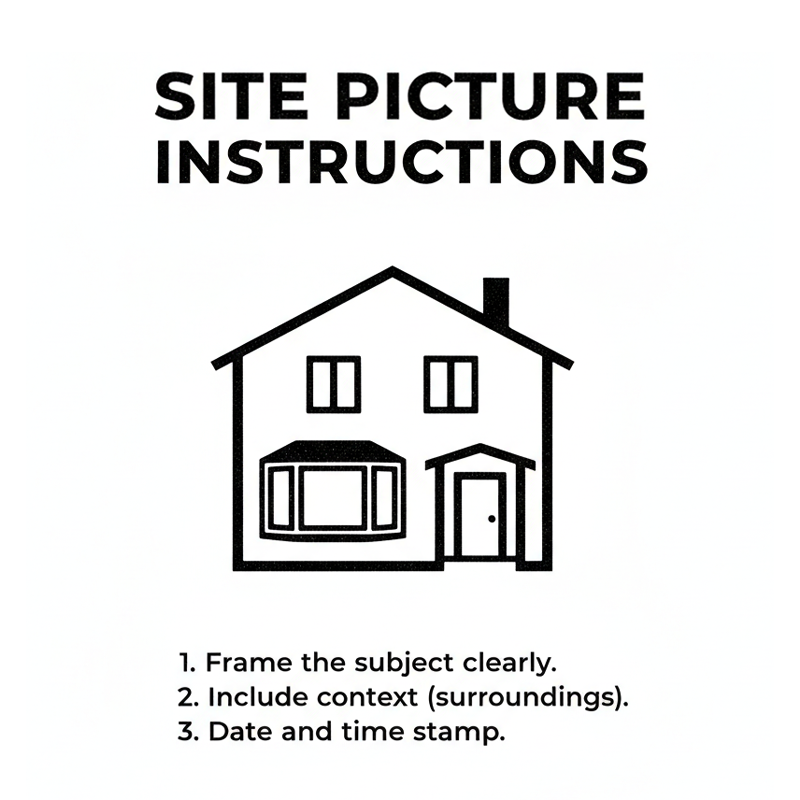
- Site Photos: Clear photos of the proposed work area.
2. Material Handling Policy
Initial Trip: One paid material pickup is included per project.
Change Orders: One additional pickup is permitted per work order change.
Customer-Provided Materials: Any forgotten items are the contractor’s responsibility to collect, without additional mileage or time charges to Aging In The Comfort Of Home®.
3. Performance Standards
Single Completion Rule: Contractors are expected to complete assigned work during their initial attempts. If a return visit is required to remedy contractor-caused issues, remediation is performed at no additional charge.
Repairs or Callbacks: Any return visit required to correct contractor-caused issues will be performed at no additional charge to Aging In The Comfort Of Home®.
Workday Hours: Project estimates are generally calculated around seven and a half (7.5) on-site hours per day for planning purposes. Contractors determine their own schedule and pace. If extended site access or timing changes are needed, please coordinate so client/property access can be arranged.
Safety Breaks: Contractors are encouraged to take a 30-minute break during the workday for safety and scheduling purposes. Break timing is flexible and left to the contractor’s discretion based on workload and job progress.
Service Readiness: Contractors arrive on-site with the tools, equipment, and materials needed for the scheduled scope.
4. Driving Time & Mileage
Commute (not paid): The first 20 minutes of travel at the start of the day and the last 20 minutes of travel at the end of the day are considered the contractor’s normal commute and are not compensable.
Start-of-day drive time (paid at $15/hr.): After the first 20 minutes of travel, time spent driving from home to the first work-related stop (either a materials store or the first job site) is paid at $15/hour.
End-of-day drive time (paid at $15/hr.): After leaving the last work-related stop, time spent driving toward home is paid at $15/hour, except the last 20 minutes, which is not compensable.
Full-rate driving (paid at normal hourly rate): Once the contractor reaches the first work-related stop (materials store or first job site), all additional driving during the workday (store → job site, job site → job site, store → store, etc.) is paid at the contractor’s standard hourly rate, up until the time they begin the end-of-day drive home.
Mileage reimbursement (only beyond 60 miles from home): If a job requires travel beyond 60 miles from the contractor’s home, the miles beyond 60 are reimbursed at the current federal mileage rate (estimated at approximately $0.70 per mile, subject to the published rate in effect on the travel date).
5. Payment Limitations
Non-Performance Clause: Payment is tied to completion of the contracted scope to agreed specifications. If services are incomplete or require remediation due to workmanship, related labor, mileage, or other costs may be non-billable until corrected.
6. Documentation & Accountability
Before and after photos are required for billing on every project. Please submit them to the administrative office upon completion.
Materials receipts must include vendor, date, customer name, and itemized totals.
Contractors provide summary documentation of work completed and time on-site at intervals agreed in the work order or invoice process; format and frequency are at the contractor’s discretion.
7. Compliance & Consequences
Repeated violations (e.g., excessive store trips, return repairs, or poor documentation) may result in:
- Non-payment for non-conforming work
- Removal from future work orders
- Termination of the independent contractor relationship per agreement terms
8. Extended Travel & Lodging
When extended travel is needed, lodging may be arranged by mutual agreement for convenience and scheduling flexibility. The contractor remains responsible for managing their project time while on site.
9. Contractor On-Time / Punctuality Standard
All independent contractors are expected to arrive on time and prepared for scheduled job site appointments, project start times, and other agreed service windows. Contractors are responsible for managing their own travel time, tools, materials, and coordination needed to perform the work as agreed.
If a delay, reschedule, or absence may affect the agreed timeline, the contractor must notify the Company or designated project contact as soon as reasonably possible so customer communication and scheduling can be properly managed.
Repeated lateness, missed appointments, or failure to communicate delays may affect future job assignments or continued eligibility for project opportunities with the Company.
10. Contractor Appearance Standard
All independent contractors must report to job sites in clean, professional, work-appropriate attire and use required safety gear at all times. Clothing must be suitable for customer-facing residential service work and may not contain offensive or inappropriate language or imagery.
For customer clarity and brand consistency, contractors are encouraged to wear company-approved or company-branded shirts while performing work connected to the Company. For specific projects, events, or customer-facing assignments, contractors may be asked to wear a company-approved branded shirt or display company-approved identification.
11. Company-Owned Tools & Equipment
Tools, devices, or equipment purchased or reimbursed by Aging In The Comfort Of Home® for use on Company projects remain Company property. Contractors may use such items only for authorized Company work unless otherwise approved in writing. Company-owned items must be returned upon request or termination of the contractor relationship.
12. Site Cleanliness Expected
Contractors are expected to maintain a clean and organized job site throughout the duration of each project. Work areas should remain free of unnecessary debris, packaging, scrap materials, and unused tools. At the conclusion of each workday, the site should be left in a safe and orderly condition appropriate for a residential environment. Final project completion should include the removal of visible debris and a general cleanup consistent with professional service standards.
13. Change Order Authorization
Contractors do not independently negotiate pricing, scope modifications, or additional work directly with customers. If a customer requests changes to the scope of work, the contractor must notify the administrative office so a formal change order can be reviewed and approved before additional work is performed.
14. Customer Payment Handling
Contractors may not accept payments directly from customers. All billing and payment collection is managed exclusively by Aging In The Comfort Of Home®®. If a customer offers payment directly, the contractor should politely direct the customer to contact the administrative office.
15. Timesheet Submission Deadline
Timesheets must be submitted no later than Friday at 11:59 PM local time for inclusion in the following Monday's payment cycle. Timesheets must include accurate hours worked, supporting documentation where required, and any applicable receipts or job notes. Late submissions may result in payment processing delays.
16. Authorized Personnel On Job Site
Only the approved contractor assigned to the work order may be present on the job site. Additional workers, assistants, partners, or other personnel are not permitted to participate in or observe project work unless prior written approval has been provided by Aging In The Comfort Of Home®®. Unauthorized individuals may not be brought onto customer property under any circumstances.
17. Subcontracting Restriction
Contractors may not hire, engage, assign, or delegate any portion of the contracted work to subcontractors, assistants, or third parties without prior written approval from Aging In The Comfort Of Home®®. If approval is granted, the original contractor remains fully responsible for the performance, conduct, artistry quality, safety compliance, documentation standards, and adherence to all Company policies for any approved personnel.

Download Contractor Regulations
Keep a copy of the complete contractor performance and site management policy for your records.
Download PDF
Contractor FAQs
1. What do I do after a site visit?
After each site visit, submit a scope, materials list, and clear photos to enable quoting and approval. This information enables accurate quoting and scheduling.
2. How many material pickups are covered per project?
One paid material pickup is included per project. Additional compensated trips may be proposed when needed to complete the scope, subject to approval. Any forgotten or missing items are the contractor’s responsibility.
3. Can I bill for travel time or mileage?
The first 20 minutes of travel at the start of the day and the last 20 minutes at the end of the day are not compensable. After that, travel from home to your first work-related stop (store or first job site) is paid at $15/hour. Once you reach the first work-related stop, additional driving during the workday is paid at your standard hourly rate. At the end of the day, travel toward home is paid at $15/hour except the last 20 minutes. If travel exceeds 60 miles from your home, miles beyond 60 are reimbursed at the current federal mileage rate (estimated ~ $0.70/mile, subject to the published rate in effect).
4. What happens if a project requires a return visit?
Return visits caused by workmanship issues or incomplete work are not billable. However, new work orders or customer-approved change orders may be billed normally.
5. Is there a limit to how many hours I can work on-site in a day?
Yes. To ensure safety and quality, on-site work should not exceed 7.5 hours per day. Any work beyond this limit must be approved by management in advance.
6. Am I required to take a lunch break at a set time?
No. Contractors manage their own schedules. A 30-minute break is recommended for safety and pacing but may be taken at your discretion.
7. How should I document my completed work?
Submit clear before and after photos for every project, itemized material receipts, and a project log summarizing time on site, tasks completed, and any issues encountered.
8. When does payment apply?
Payment is contingent upon the successful completion of the contracted scope of work. Incomplete or noncompliant jobs may not qualify for payment until corrected.
9. What if a customer provides incorrect or missing materials?
If customer-supplied materials are missing or incomplete, contractors should notify the customer that additional materials are needed. If the customer requests a pickup, please contact the office for confirmation before proceeding.
10. How are repeated performance issues handled?
Consistent documentation errors, excessive return trips, or poor workmanship may result in payment reduction, suspension from new assignments, or discontinuation of contract work.
11. Who do I contact if I have questions or need clarification on a project?
Contact the administrative office or project coordinator listed on your work order. Timely communication helps avoid delays and ensures accurate project tracking.
Independent Contractor Relationship
Nothing in this policy should be interpreted as creating an employment relationship. All individuals performing work under this agreement act as independent contractors, responsible for their own schedules, methods, and tax obligations.